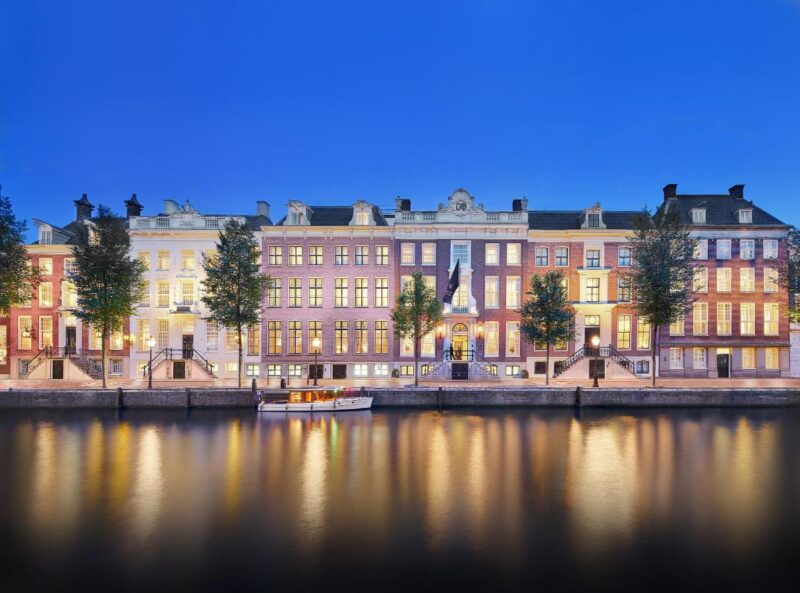
In Amsterdam the question is not which hotel but which neighbourhood, because the canal belt is small enough that a ten-minute difference in location changes the whole trip. A room on the Prinsengracht and a room on the Damrak are eight minutes apart and belong to different cities. Below is what each area is actually like at night, which is when it matters.
Where to stay, and what you get
| Area | What the nights are like | Suits |
|---|---|---|
| The canal belt — Herengracht, Keizersgracht, Prinsengracht | Quiet after ten. Water, bridges and the occasional boat. 10 minutes to the Dam | A first visit, and anyone who came for the canals |
| The Jordaan | Residential and genuinely quiet. Brown cafes rather than clubs. 15 minutes | Repeat visitors and light sleepers |
| The Nine Streets | Shops close at six and the streets empty. Central without being loud. 12 minutes | Shopping, and being able to walk everywhere |
| The Damrak and Centraal Station | Loud until late, and the least Dutch part of the city. 5 minutes | Short stays and early trains |
| The Red Light District | Busy until two, crowded at weekends. 5 minutes | Nightlife, and only if you know what you are booking |
| Around the Museumplein | Residential, wide streets, almost silent at night. 25 minutes or 15 by tram | Museums, families and quiet |
| Amsterdam Noord | A ferry ride from everything, newer hotels, real quiet. 5 minutes plus a free ferry | Value, and travellers who do not mind the crossing |
Three things that catch people out
- Canal houses have stairs. Seventeenth-century buildings were taxed on their width, so they went up instead. Many have no lift and staircases at an angle closer to a ladder. If that matters, check before booking, not after.
- The tourist tax is charged on top. Amsterdam levies a percentage of the room rate per night, added at the hotel rather than included in the online price. Budget for it separately.
- Front rooms on a canal are the view and the noise. Boats, bicycles and bridges carry sound across water. A room at the back is quieter and cheaper, and you can look at the canal from the street.
The neighbourhoods in full
| Neighbourhood | What you find there |
|---|---|
| The Red Light District | The oldest part of the city, built around two canals, five minutes from Centraal Station |
| The Nine Streets | Nine short streets crossing four canals: independent shops, cafes and 140 listed buildings |
| The Jordaan | The former workers’ quarter west of the Prinsengracht, with markets and hidden courtyards |
| Museumplein | The museum square: Rijksmuseum, Van Gogh, Stedelijk, Moco and the Concertgebouw |
| The Kalverstraat | The main shopping street, from Dam Square to the Munttoren |
Getting to your hotel
| Route | What it does |
|---|---|
| Tram line 2 | Centraal Station to the Museumplein across the canal belt in fifteen minutes |
| Metro line 52 | The blue line, under the old city from Noord to Zuid, with a free archaeological display at Rokin |
| Map of the canal district | How the four canals, the neighbourhoods and the tram routes fit together |
Before you arrive
We do not sell rooms. What is worth arranging in advance is everything you will do from the hotel, and somewhere to leave the bags on the day you check out.
- Luggage storage — for the hours between check-out and your train.
- I amsterdam City Card — museums plus unlimited transport from wherever you are staying.
- GVB day ticket — essential if your hotel is outside the canal belt.
Where to book, by neighbourhood
We work with Booking.com. The counts below are the number of properties Booking currently lists in each district — useful in itself, because it tells you where the supply is. The price you pay is the same as booking direct.
| Neighbourhood | Properties listed | Book |
|---|---|---|
| The canal belt | 139 | See hotels |
| The Nine Streets | 20 | See hotels |
| The Jordaan | 40 | See hotels |
| De Wallen | 43 | See hotels |
| The Museum Quarter | 59 | See hotels |
| Oud-Zuid | 69 | See hotels |
| The old centre | 206 | See hotels |
| Amsterdam Noord | 85 | See hotels |
| De Pijp | 42 | See hotels |
| Oud-West | 59 | See hotels |
| All of Amsterdam city centre | 547 | See hotels |
The canal belt itself for a first visit, the Jordaan or the Nine Streets if you want quiet and can walk, and around the Museumplein for museums and families. The Damrak is the most central and the least pleasant. Amsterdam Noord is the best value if you do not mind the free ferry.
A front room facing a canal gets sound carried across water from boats, bridges and cyclists. Rooms at the back of the same building are markedly quieter and usually cheaper. The canal belt itself is quiet after about ten at night; the Damrak and De Wallen are not.
Many canal-house hotels do not. Seventeenth-century houses were taxed on their width, so they were built tall and narrow with staircases closer to ladders. If stairs are a problem, confirm with the hotel before booking rather than relying on the listing.
Yes. Amsterdam charges a percentage of the room rate per night, collected by the hotel and normally not included in the price shown when you book. Budget for it as a separate line.
Around the Museumplein or in Amsterdam Noord. Both are residential, quiet at night, and have rooms and apartments large enough for four. From the Museumplein, tram 2 reaches Centraal Station in fifteen minutes; from Noord the ferry is free and takes three.
More to do
- Everything to do — the full index.
- Map of the canal district — where each of these areas sits.
- Tram line 2 — the line that connects most of them.
More on our own pages: left luggage near Central Station


