
One hour, a covered boat, and the whole seventeenth-century canal belt from the water. This is the cruise most visitors mean when they say they want to see Amsterdam by boat, and at just over twelve euro it is the cheapest ticket on the canals. It sails all year, leaves every twenty to thirty minutes from three points in the centre, and carries an audio guide in nineteen languages.
What the one-hour cruise is
The traditional canal cruise is a one-hour loop through the canal belt on a low, glass-roofed saloon boat. You sit down, an audio guide runs in the language you pick, and the boat does the rest. There is no walking, no queue at each sight, and no decision to make beyond which pier you start from.
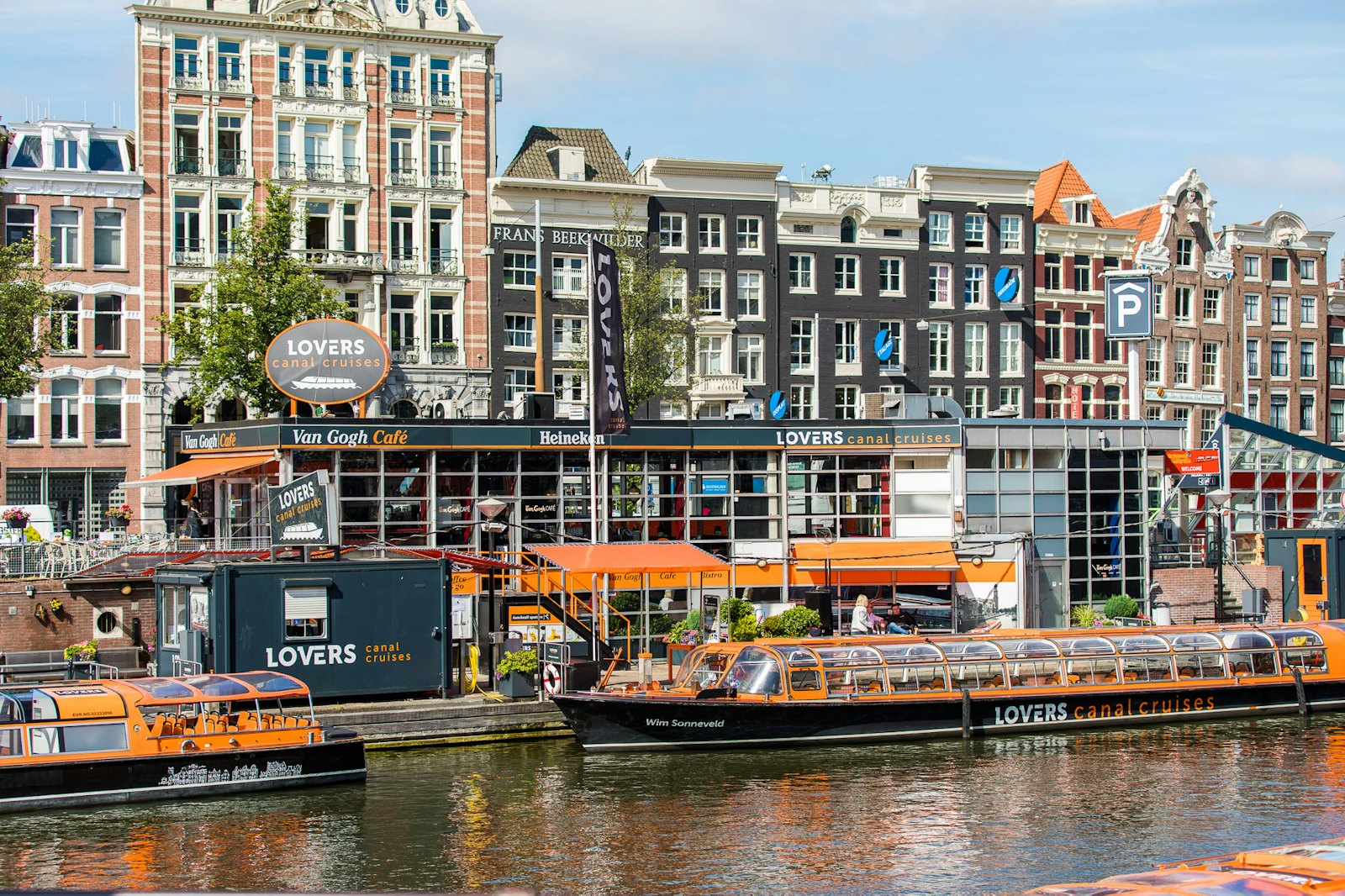
It is run by Lovers, the oldest canal cruise company in Amsterdam and the one behind the orange boats you see everywhere on the water. The tickets on this page cover the whole fleet: you choose your departure point at checkout and the price is the same wherever you board.
Almost 3,500 people have rated this cruise on Tiqets, which makes it by some distance the most-reviewed boat trip in the city. That is worth knowing for what it is: a rating of 4.2 out of 5 across that many people describes a reliable hour, not a once-in-a-lifetime one.
| Traditional 1-hour canal cruise | |
|---|---|
| Duration | 1 hour, a full loop |
| Boat | Covered saloon boat, glass roof, heated |
| Guide | Audio guide in 19 languages; live guide in English on some sailings |
| Also included | Free wifi on board |
| Departures | Every 20 to 30 minutes, roughly 10:00 to 18:00 |
| Departure points | Central Station, the Anne Frank House and the Rijksmuseum |
| Price | from €12,14 per person |
| Rating on Tiqets | 4.2 out of 5 across 3,531 reviews |
| Operator | Lovers — the orange boats |
Check today’s times and book the traditional canal cruise
Where it leaves from
One ticket, three piers. You pick yours when you check out, and it makes more difference to your day than anything else on this page — start from the pier nearest whatever you are doing next.
Central Station — Damrak 20-D
Two minutes from the station exit, on the water in front of it. The obvious choice if you have just arrived, are travelling on the same day, or are staying anywhere near the old centre. It is also the busiest pier, so book a departure rather than turning up at noon in July.
Anne Frank House — Prinsengracht
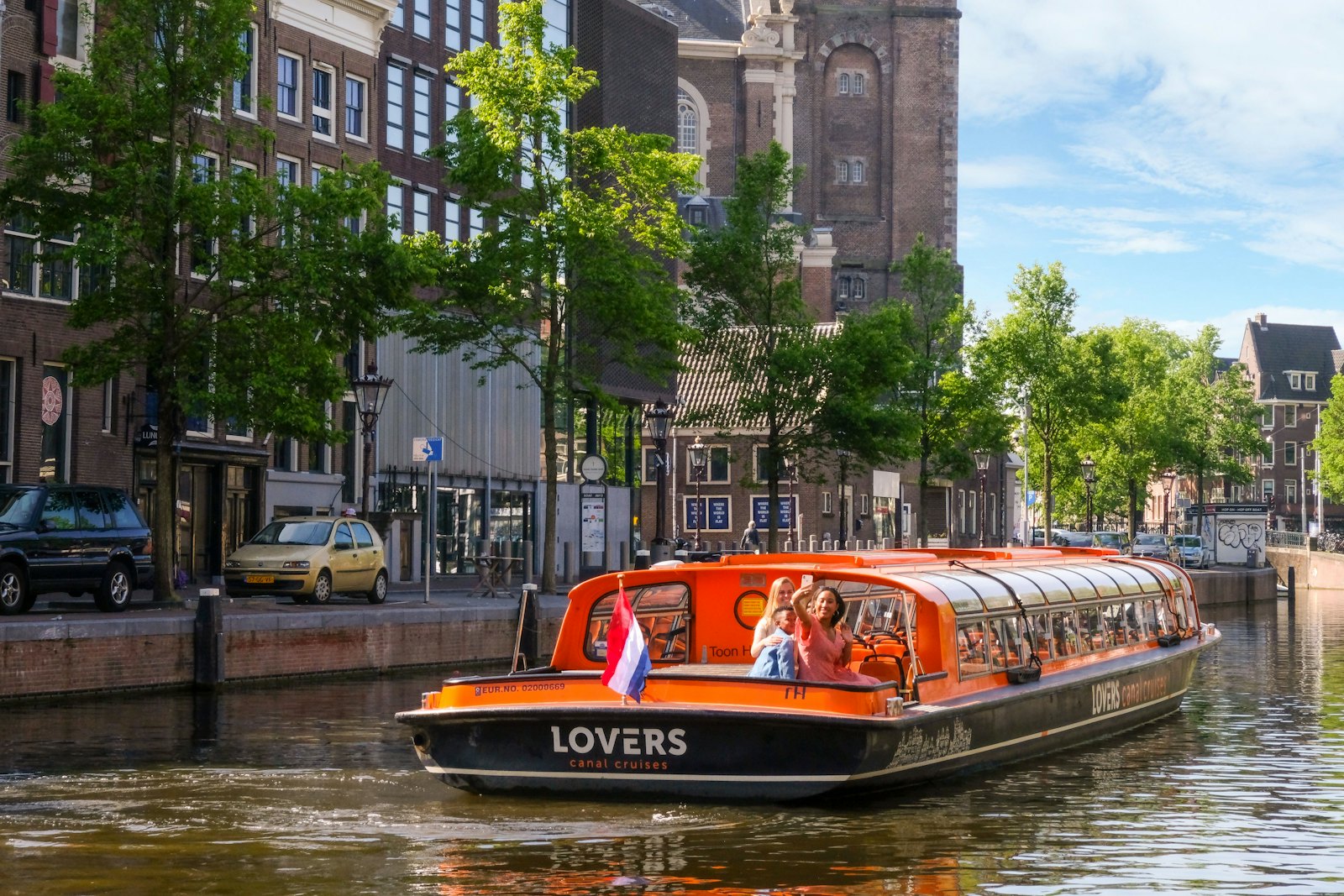
In the middle of the canal belt, beside the Westerkerk. Best if you are already in the Jordaan or have a slot at the Anne Frank House: you step off the boat into the prettiest part of the walk, and the first ten minutes of the cruise are the postcard canals rather than the harbour.
Rijksmuseum — Stadhouderskade
On the museum side of town, a two-minute walk from the Rijksmuseum and the Van Gogh Museum. The natural way to end a museum afternoon, and the quietest of the three piers.
What you see in that hour
The route runs the horseshoe of the Herengracht, Keizersgracht and Prinsengracht, drops down to the Amstel and comes back past the old harbour. In an hour you cross about a hundred bridges’ worth of city without walking a step.
The stretch people remember is the Golden Bend on the Herengracht, where seventeenth-century merchants bought double plots and built houses wide enough for two front doors. From the water you see how deep those houses run — the canal belt is a city of narrow fronts and very long backs.
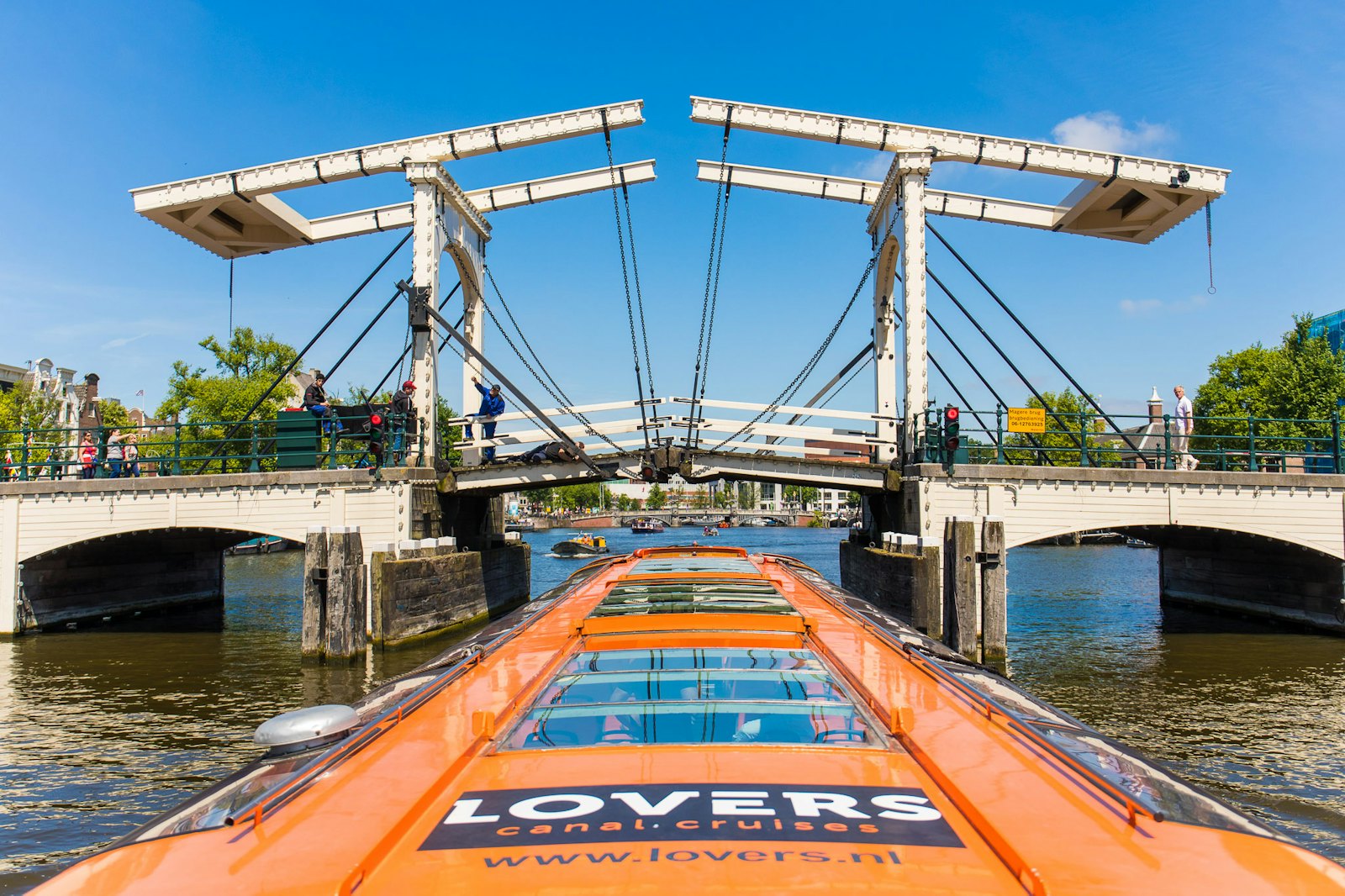
On the Amstel the boat passes the Magere Brug, the white wooden drawbridge that still opens by hand several times a day, and the floodlit H’ART Museum. Past the old harbour you come alongside the replica of the eighteenth-century VOC ship Amsterdam at the National Maritime Museum. In between: some twenty-five hundred houseboats, the leaning gables of the Damrak, and the seven-bridge view on the Reguliersgracht if the route bends that way.
Why the boats are orange
The orange is not decoration. Lovers has been sailing the Amsterdam canals since 1928 and painted its fleet in the national colour of the House of Orange — the same orange the country wears on King’s Day. Amsterdammers navigate by it: if you tell someone to meet you at the orange boats, they know which pier you mean.
The boats themselves are the classic Amsterdam saloon design: long, low and flat, because the canal bridges are low and the locks are narrow. The glass roof is what makes the cruise work in a country with this much rain — you keep the view and lose the weather.
Is it worth it?
Take this cruise if:
- It is your first visit. An hour on the water gives you the shape of the city faster than a morning of walking, and you will navigate better afterwards.
- You are short on time. One hour, one price, no planning.
- The weather is poor. The boat is covered and heated, which makes it the best rainy-afternoon ticket in Amsterdam.
- You are with children or with someone who tires easily. Everybody sits down and everybody sees the same thing.
- You want the cheapest way onto the water. Nothing else on the canals costs less.
Practical points
- Be at the pier fifteen minutes early and check the address on your ticket — the three piers are not walking distance from one another.
- Sit on the left going out if you board at Central Station; that side faces the canal houses for most of the loop.
- Bring headphones you like. The audio guide runs through a socket at your seat on most boats.
- Photographs through glass come out better with the lens right against the window and the flash off.
- It sails all year. In winter the boat is heated; from late November to January the evening sailings pass the Amsterdam Light Festival.
Wondering whether an open boat or an evening sailing suits you better? Compare all twenty boats in our guide to Amsterdam canal cruises, or read about the evening canal cruise.
Frequently asked questions
From €12,14 per person for the traditional one-hour cruise, which makes it the cheapest ticket on the Amsterdam canals. Children’s tickets are cheaper and the youngest age group often travels free.
Exactly one hour, sailing a full loop and returning to the pier you left from.
From three piers: Damrak 20-D beside Central Station, the Prinsengracht by the Anne Frank House, and the Stadhouderskade by the Rijksmuseum. One ticket covers all three; you choose your pier when you book.
Yes. It is a traditional saloon boat with a glass roof and heating, so the cruise runs in rain and in winter without any loss of view.
There is an audio guide in nineteen languages, and free wifi on board. Some sailings also carry a live guide who speaks English.
The Golden Bend on the Herengracht, the Magere Brug over the Amstel, the H’ART Museum, the replica VOC ship at the Maritime Museum, the leaning houses of the Damrak and hundreds of houseboats along the canal belt.
Yes. The orange boats belong to Lovers, which has sailed the canals since 1928 and painted its fleet in the national colour. This ticket covers that fleet.
Boats leave every twenty to thirty minutes, so on a quiet day you can walk up. In summer, at weekends and over Christmas the Central Station pier queues, and booking a time saves you standing in it.


