A 1914 cargo barge moored on the Prinsengracht that somebody lived on, opened up so you can walk through it. It takes about half an hour, costs from €10,00, and answers the question every visitor to Amsterdam ends up asking at some point: what is it actually like inside one of these?
What the Houseboat Museum is
The boat is called the Hendrika Maria and she was built in 1914 to carry sand, gravel and coal around the Dutch inland waterways. A skipper and his family lived in a cabin at the stern the size of a large cupboard while the hold carried the cargo. When freight moved to lorries in the second half of the twentieth century, hundreds of barges like her were either scrapped or converted into homes — which is where most of Amsterdam’s two and a half thousand houseboats come from.
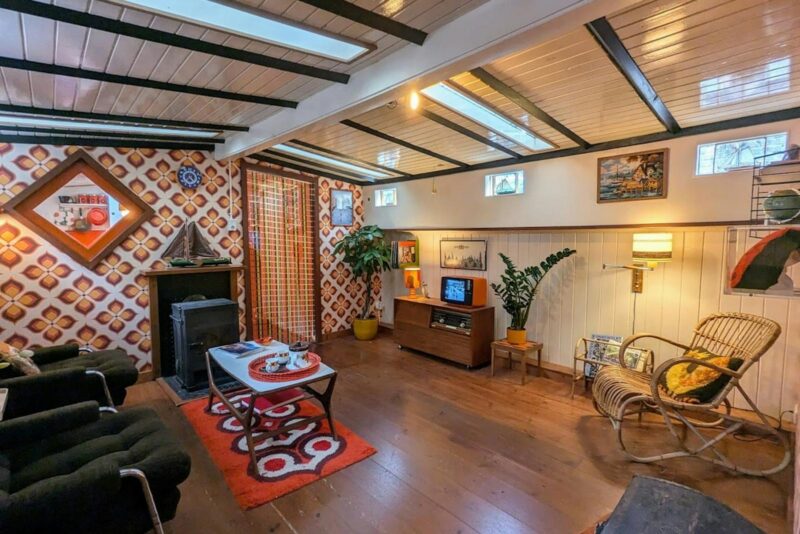
The Hendrika Maria was converted in the 1960s and opened as a museum in 1997. The hold, which once held forty tonnes of sand, is now a living room with a stove, a bathroom and a bedroom, and you can walk through all of it. Everything is real: this is a house that people lived in, not a reconstruction.
| Houseboat Museum | |
|---|---|
| Address | Prinsengracht 296 K, 1016 HW Amsterdam |
| Opening hours | Daily from 10:00. The closing time varies by season — check the museum’s site for today’s hours |
| Price | From €10,00 |
| How long | About 30 minutes |
| Included | A self-guided audio tour in 18 languages |
| The boat | The Hendrika Maria, a freight barge built in 1914 and converted in the 1960s |
| Rating | Too few reviews on Tiqets to mean anything — treat this as a small museum, not a rated attraction |
| Accessibility | You board by a gangplank and descend a steep companionway into the hold |
| Getting there | Prinsengracht near the Elandsgracht. Five minutes from Westermarkt and the Anne Frank House |
Check availability and book the Houseboat Museum
What you see on board
- The hold — the main space, converted into a living room with a wood stove, a table and windows at water level. This is what people come to see, and it is bigger than anyone expects.
- The skipper’s cabin — the original living quarters at the stern, left as they were. A whole family lived in it. The contrast with the converted hold is the point of the visit.
- The engine room — the original machinery, still in place.
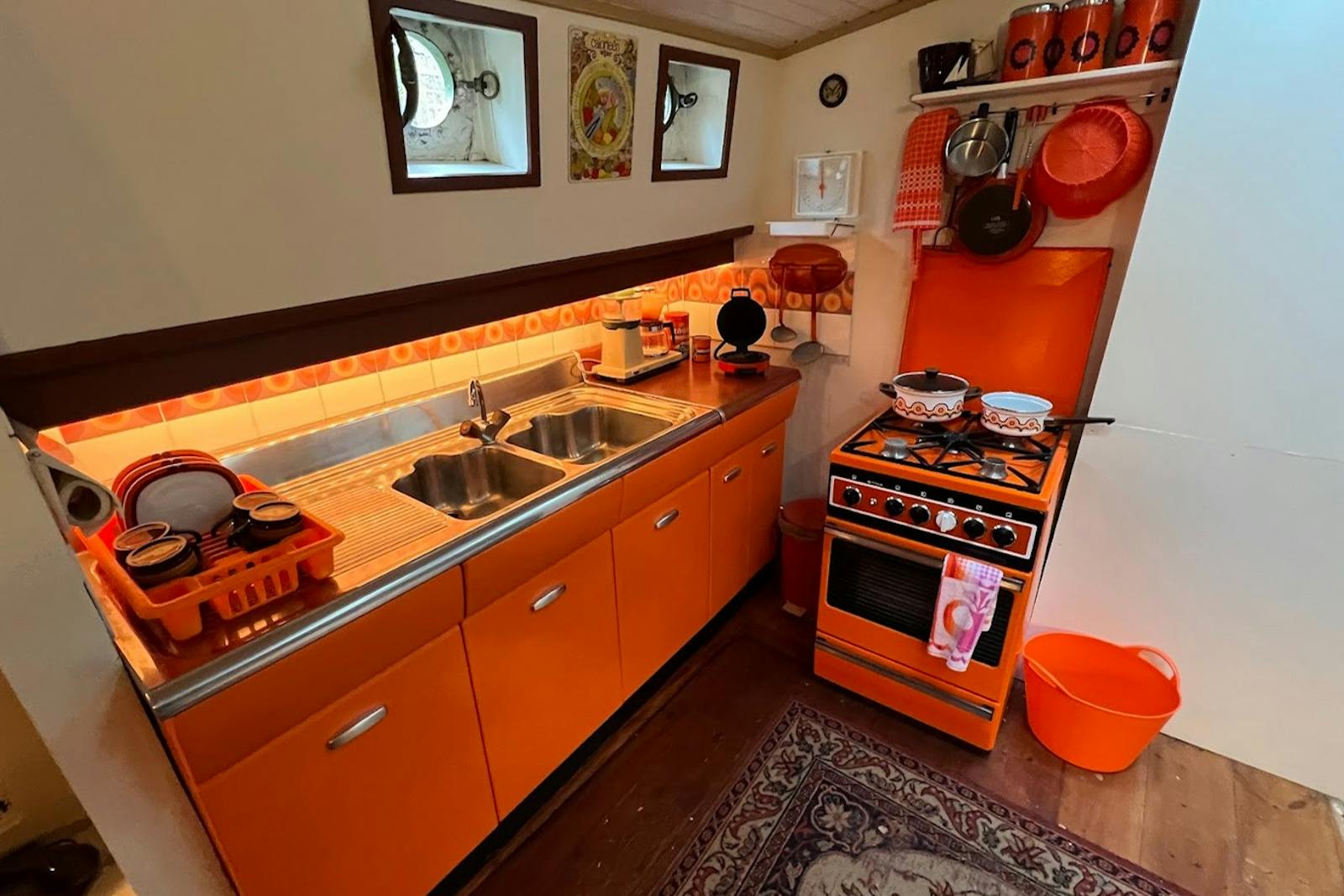
- The galley and bathroom — the practical business of plumbing, heating and rubbish on a boat, which is most of what houseboat life actually consists of.
- The video walls and the audio tour — how a mooring permit works, what one costs, how boats connect to water, sewerage and electricity, and why there are no new moorings.
- The deck — a small terrace at canal level, which on a dry day is the nicest place to sit on the whole Prinsengracht.
Is it worth it?
For €10 and half an hour, yes, with one condition: know what you are buying. This is a converted barge with six rooms, not a museum with a collection. People who book it expecting an exhibition come away thinking it was small and expensive; people who book it because they have walked past a thousand houseboats and wondered, come away satisfied.
It is unusually good with children, who take about four seconds to work out that the whole house is a boat and then want to open everything. And it is the only place in the city that explains the mooring system — why Amsterdam has thousands of houseboats, why there will never be more, and what one costs — which is the question people actually have.
Note that it has very few reviews on the booking platforms, so ratings there tell you nothing. That is a function of its size, not its quality.
Practical points
- Opening times shift with the season. Check the museum’s own site for today’s hours before you make a trip of it.
- You get aboard by gangplank and down a steep set of steps. It is not suitable for wheelchairs and is awkward with a pushchair.
- Half an hour is the visit. Combine it with the Anne Frank House or a walk through the Jordaan, both five minutes away.
- The audio tour is included and runs in eighteen languages.
- It is a small operation and can close at short notice for weather or maintenance.
- If you want to be on the water rather than look at it, our canal cruise comparison covers the alternatives.
Frequently asked questions
From €10,00 per person, including a self-guided audio tour in eighteen languages.
About thirty minutes. It is one converted barge with six rooms, not a large museum.
The Hendrika Maria, a freight barge built in 1914 to carry sand and coal on the Dutch inland waterways. She was converted into a home in the 1960s and opened as a museum in 1997.
No. You board across a gangplank and go down a steep companionway into the hold.
Roughly two and a half thousand, most of them converted freight barges like this one. The number is effectively fixed because the city no longer issues new mooring permits, which the museum explains.
Prinsengracht 296 K, on the canal near the Elandsgracht — about five minutes on foot from Westermarkt and the Anne Frank House.


