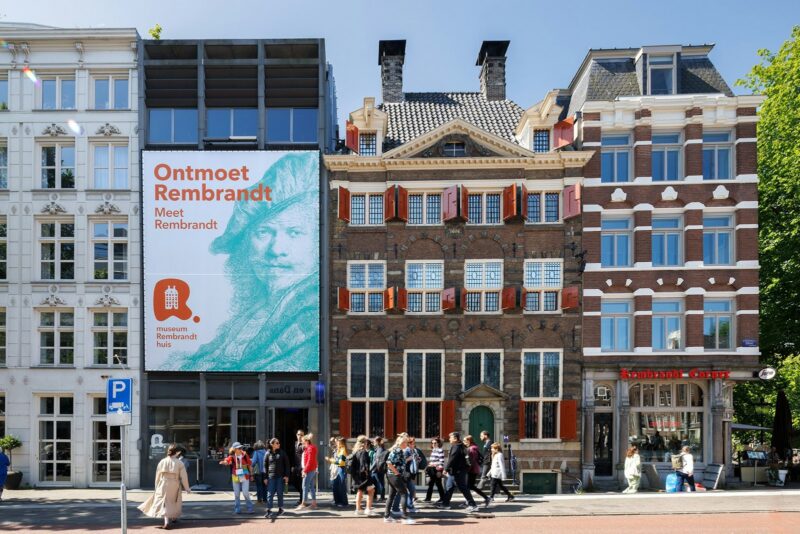
Rembrandt bought this house on the Jodenbreestraat in 1639, at the height of his success, and was declared insolvent in it nineteen years later. The inventory drawn up by his creditors listed every object in every room — which is why the house you walk through today is furnished almost exactly as he left it. From €23,50, rated 4.7 out of 5, and open every day.
What the Rembrandt House is
Rembrandt van Rijn lived and worked here from 1639 to 1658. He paid thirteen thousand guilders for the house, a sum he never managed to clear, and in 1656 he filed for a form of bankruptcy that required a notary to walk through the building and write down everything in it. That document survived.
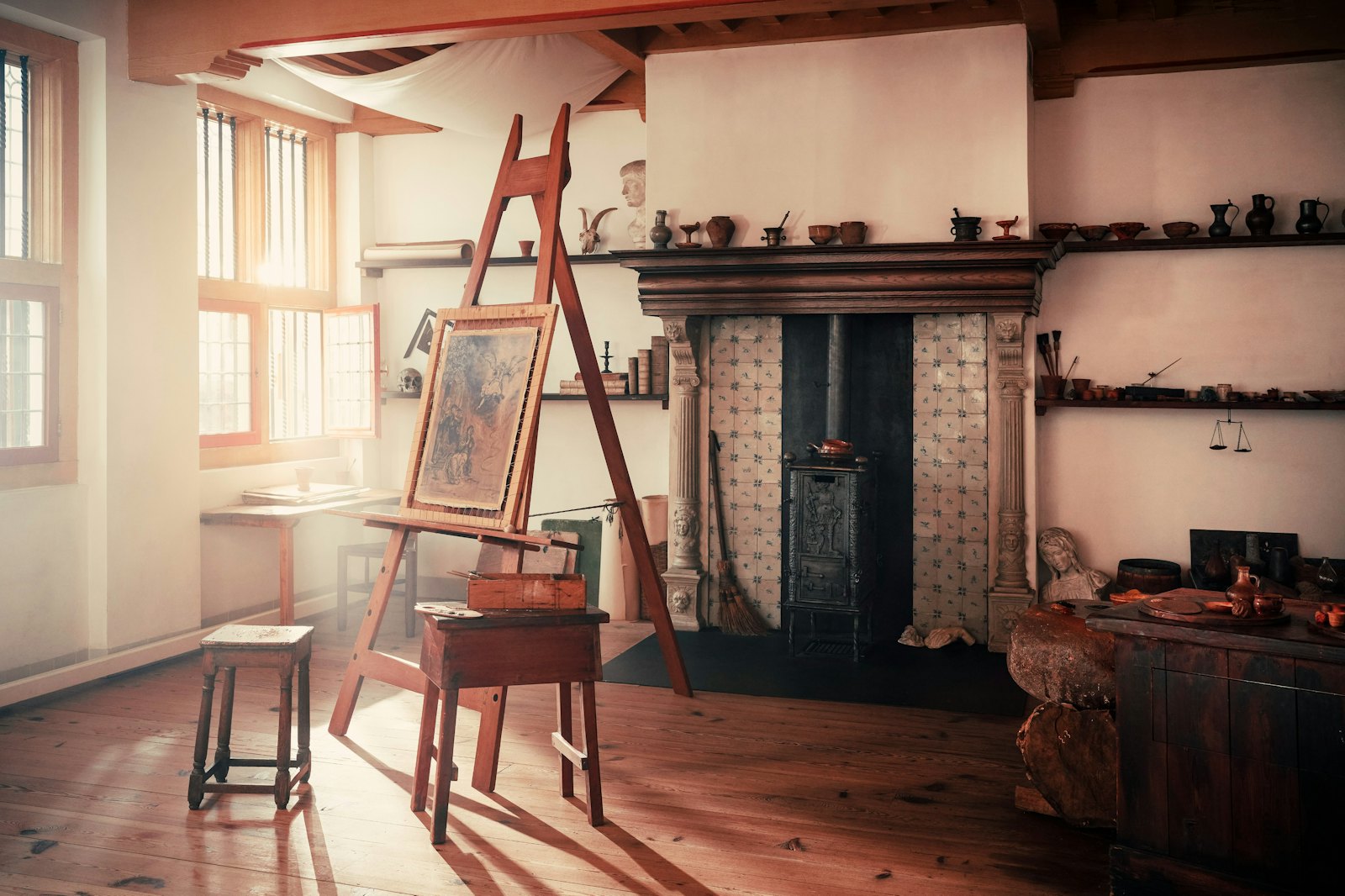
When the house was restored and reopened as a museum, that inventory became the blueprint. The rooms are not a general impression of a seventeenth-century interior; they are a reconstruction of one specific household, room by room, from a legal document. It is the difference between a period set and a piece of evidence, and it is what makes the visit worth the ticket.
| Rembrandt House Museum | |
|---|---|
| Address | Jodenbreestraat 4, 1011 NK Amsterdam |
| Opening hours | Daily from 10:00. Closed on King’s Day and 25 December |
| Price | From €23,50 including the multimedia guide |
| Rating | 4.7 out of 5, from more than 1,100 reviews |
| Included | The furnished house, the etching and paint-making demonstrations, the print collection and a multilingual guide |
| Languages | The guide runs in sixteen languages, plus Dutch Sign Language |
| How long | An hour to an hour and a half |
| Getting there | Metro 51/53/54 to Waterlooplein, two minutes away. Tram 14 stops at Waterlooplein as well |
| Rembrandt lived here | 1639 to 1658 |
Check availability and book the Rembrandt House Museum
What you see inside
The house is narrow and tall, as Amsterdam houses are, and the route runs upward through it:
- The living quarters — the entrance hall and the room where Rembrandt slept, in a box bed that looks impossibly short until someone explains that people slept half upright.
- The art dealer’s room — Rembrandt bought and sold work as well as making it, and this is where clients were received and paintings hung for sale.
- The studio — the largest room in the house, with north light, and the reason the whole reconstruction works. Pigments are ground here in daily demonstrations, using the same minerals he used.
- The pupils’ studio — partitioned cubicles in the attic where his students worked, which explains a great deal about how a seventeenth-century workshop actually produced paintings.
- The cabinet of curiosities — shells, weapons, plaster casts and stuffed animals, all listed in the inventory. He spent money he did not have on this room.
- The print rooms — the museum holds almost all of Rembrandt’s etchings, shown in rotation, and there is a daily demonstration of how they were printed.

Is it worth it?
There is one thing to be clear about before you book: this is not where you go to see Rembrandt’s paintings. The Night Watch and the Jewish Bride hang in the Rijksmuseum. What the Rembrandt House holds is his prints — of which it has nearly the complete set — and his house.
Taken on those terms, it is one of the most rewarding hours in Amsterdam, and considerably quieter than the big museums on the Museumplein. You come out understanding how a painter of that period lived, bought, taught and went broke, which is context that makes the Rijksmuseum visit better rather than replacing it. The two work well on the same day: the house in the morning, the paintings in the afternoon.
If you have an hour and want to be moved rather than informed, the Van Gogh Museum is the stronger choice. If you want to stand in the room where the work was made, this is the only place in the world you can.
Practical points
- Check the demonstration times when you arrive — etching and paint-making run several times a day and they are the best part of the visit.
- The multimedia guide is included and worth using; without it the rooms are quieter than they should be.
- The house has steep, narrow seventeenth-century stairs. The modern wing next door is accessible, but the historic house is difficult for anyone with limited mobility — contact the museum in advance.
- An hour and a half is generous. This is a good museum to pair with something else rather than a whole morning.
- Waterlooplein market is directly outside, and the market runs Monday to Saturday.
- It is closed on King’s Day and Christmas Day, and open every other day of the year.
More houses, collections and historic interiors are listed on our Amsterdam museums page.
Frequently asked questions
From €23,50 per person, which includes the multimedia guide and the daily etching and paint-making demonstrations.
Only a small number. The museum’s strength is his etchings, of which it holds nearly the complete set. His major paintings, including The Night Watch, are in the Rijksmuseum.
About an hour to an hour and a half, including one of the demonstrations.
Because Rembrandt went insolvent in 1656 and a notary recorded every object in every room. The reconstruction follows that inventory, which is why it is unusually accurate.
It opens daily from 10:00 and is closed only on King’s Day and 25 December.
Jodenbreestraat 4, two minutes from Waterlooplein metro station on lines 51, 53 and 54. Tram 14 also stops at Waterlooplein.


